


Why Brazil?
PROVEN RESERVES
- Top-three REE reserves (~21 Mt REO); 2024 mine output just 20 t
- Critical-minerals pedigree: ~92% of global niobium production1
UNIQUE GEOLOGY
- Ionic-clay production launched (Serra Verde, 2024); more projects advancing (Caldeira)2
- Low-carbon grid: ~88% renewable electricity in 20243
MINING FRIENDLY
- Predictable permitting: three-stage LP/LI/LO licensing; experienced agencies (ANM/IBAMA)4,5
- Royalty clarity: CFEM 2% for REEs, assessed on gross revenue6,7
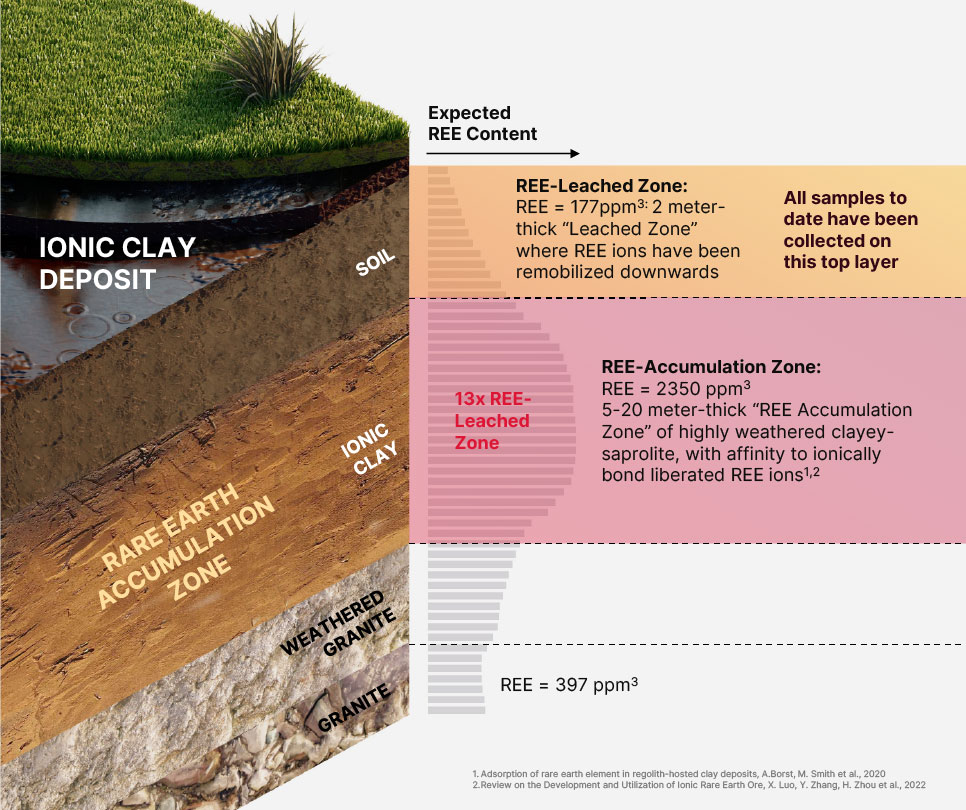
Ionic REE Clay Mineralization
- Lower Geological Risk: Flat-lying, laterally continuous clay blankets vs. structurally controlled veins.
- Shallow “Accumulation Zone”: Short, low-cost, low-risk drill holes; rapid delineation.
- Simplified Flowsheet: Free digging with no crushing/milling; ion-exchange leach to desorb REE ions at near-ambient conditions.
8 Exploration Permits
15,979 Hectares
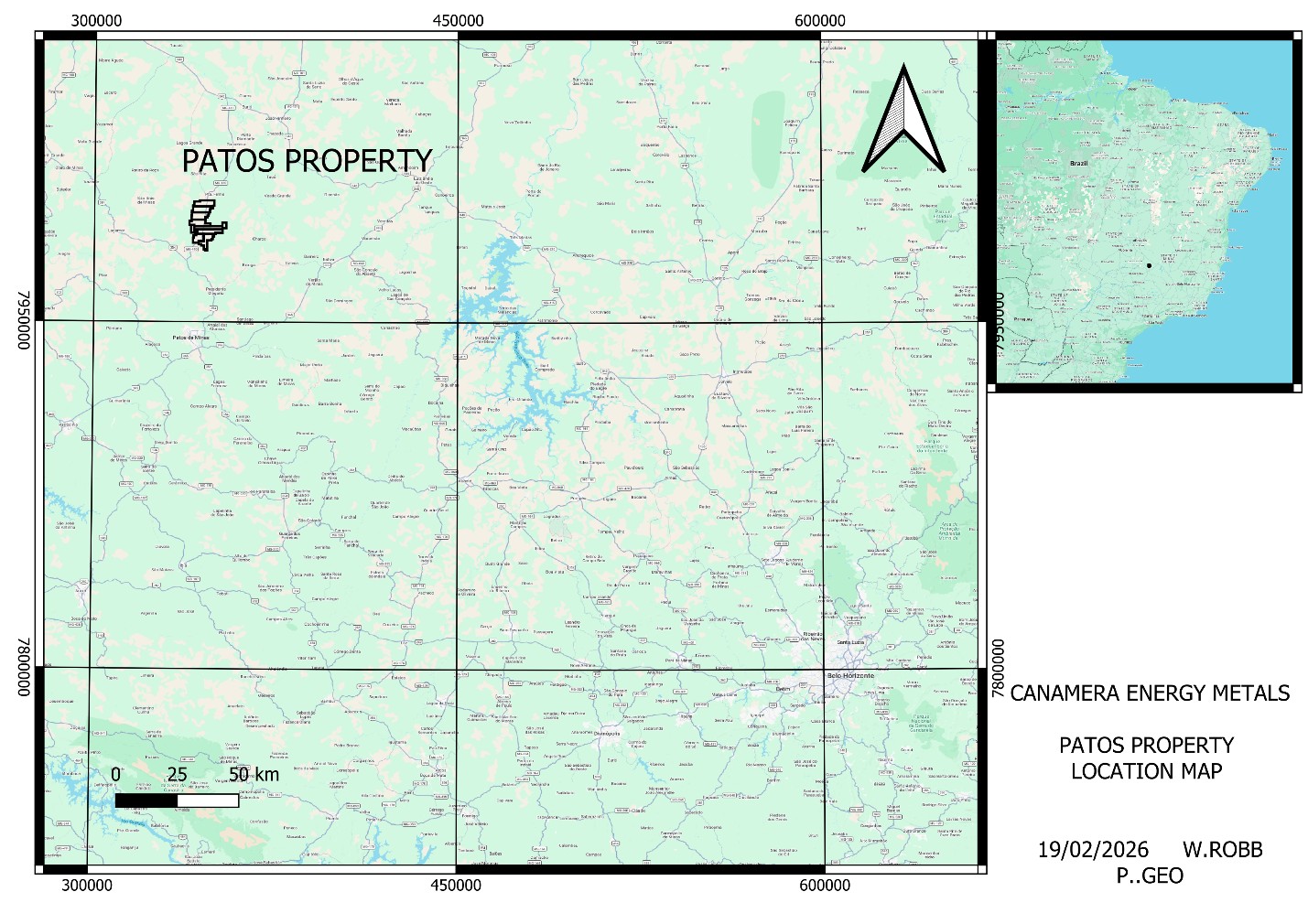
Presidente Olegário, Minas Gerais, Brazil
Project Overview
The Patos Project comprises eight prospecting licences totalling approximately 15,979 hectares, located in the municipality of Presidente Olegário, State of Minas Gerais, Brazil — approximately 330 kilometres from Belo Horizonte and accessible by road. The Property is underlain by the Patos Formation, a member of the Mata da Corda Group, the same stratigraphic package currently being explored for ionic clay rare earth element (REE) mineralization by other operators active in the region.
Canamera has signed a Letter of Intent (LOI) to acquire a 100% interest in the Patos Project, subject to a drill-gated due diligence process and execution of a formal definitive agreement. The transaction is subject to applicable Canadian securities laws and CSE approval.
Why Patos?
Ionic clay REE deposits have attracted growing global attention due to their amenability to low-cost, low-impact leaching extraction methods — requiring no crushing or milling — compared with conventional hard-rock REE processing. The Mata da Corda Group in Minas Gerais is an active and emerging ionic clay REE address. At 15,979 hectares, the Patos land position is one of the largest in Canamera’s Brazilian portfolio and complements the Company’s existing Turvoândia and São Sepé projects.
The transaction’s drill-gated structure allows Canamera to conduct meaningful on-ground due diligence at minimal cost before committing to the full acquisition, substantially reducing acquisition risk.
Project Highlights
- Size: 15,979 ha, 8 exploration permits
- Location: Presidente Olegário, Minas Gerais, Brazil
- Distance to Infrastructure: ~330 km from Belo Horizonte; road accessible
- Geological Setting: Patos Formation, Mata da Corda Group
- Commodity: Ionic clay rare earth elements (TREO)
- Deposit Type: Ionic clay — low-cost leaching extraction potential
- Initial Program: Up to 10-hole auger drill program to verify mineralization
- Ownership: LOI to acquire 100% interest (subject to definitive agreement and CSE approval)
Drill-Gated Acquisition Structure
- The LOI is structured in two stages to manage acquisition risk:
Stage 1 — Due Diligence (expires April 18, 2026): Canamera funds up to C$20,000 to conduct a 10-hole auger drill program jointly with the vendor’s team. Canamera oversees sampling integrity and chain-of-custody. If results are unsatisfactory, the option lapses with no further obligation beyond the Initial Payment expended.
Stage 2 — Option Exercise: (on satisfactory drill results) Canamera may acquire 100% of the Property for total consideration of C$535,800:
- Cash: C$228,000 (inclusive of C$20,000 Initial Payment)
- Shares: C$307,800 at 10-day VWAP; 50% subject to 4-month escrow, 50% to 6-month escrow
NSR: 2% net smelter return royalty to the vendor; Canamera retains right to buy back 50% (reducing to 1% NSR) for C$228,000 within one year of commencement of commercial production.
Milestone Payments: (on satisfactory drill results) Canamera may acquire 100% of the Property for total consideration of C$535,800:
- C$342,000 (50% cash / 50% shares) on reporting a JORC Inferred Resource ≥250 Mt grading ≥2,000 ppm TREO within 5 years
- C$228,000 (50% cash / 50% shares) on reporting drill intercepts of ≥25m grading ≥2,500 ppm TREO within 3 years
The LOI is non-binding except for the option payment and process provisions described herein.
Stay Informed
News and Updates